In this article
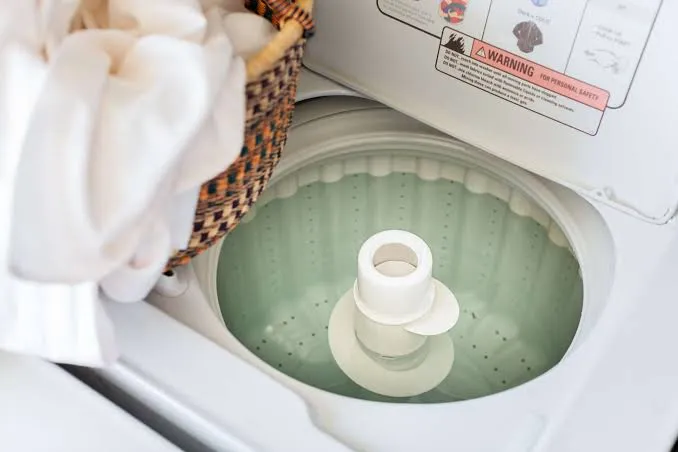
A washer not draining or spinning usually has one of five causes: a clog in the drain pump or hose, a failed drain pump, a broken or slipping drive belt, a faulty lid switch or door lock, or an unbalanced load. Draining comes before spinning in every cycle, so if the water can’t get out, the washer won’t spin either. Most of these problems can be found in under an hour, and many cost less than $50 to fix yourself.
Why Is My Washer Not Draining or Spinning?
| Cause | Typical sign | DIY? |
|---|---|---|
| Kinked or clogged drain hose | Slow drain, water left in the tub | Yes |
| Blocked pump filter or pump | Pump hums but no water moves | Yes |
| Failed drain pump | Silent pump, or a wobbling pump pulley | Usually |
| Broken or worn drive belt | Motor runs, drum doesn’t turn, burning-rubber smell | Yes, on belt-drive models |
| Lid switch or door lock | Fills and agitates but skips spin | Usually |
| Unbalanced or oversized load | Stops mid-spin, balance error code | Yes |
| Motor coupler, clutch or transmission | Grinding, no spin even with a good belt | Sometimes |
| Control board or too many suds | Error codes, foam in the drum | Varies |
Step 1: Get the Water Out Safely
Unplug the washer before anything else. Then remove the standing water:
- Top-loaders: take out the wet laundry, then bail with a bucket or use a small transfer pump to empty the tub into a sink. Don’t leave a pump that isn’t rated for submersion sitting in the water.
- Front-loaders: open the small panel at the lower front, lay towels and a shallow pan down, and drain through the short emergency hose or by slowly unscrewing the pump filter.
- Any washer: pull the drain hose out of the standpipe and lower it into a bucket below the level of the tub; gravity will empty some of it.
An empty, lighter washer is also much safer to tip or move for the checks below.
Step 2: Check the Drain Hose and Standpipe
Pull the washer out and look for kinks or a crushed section behind it. Disconnect the hose and run water or a plumber’s snake through it to clear lint or debris. Also check the house side: if the standpipe or laundry sink drain is clogged, water backs up and the washer can’t empty. The hose should go no more than about 8 inches into the standpipe, and the standpipe should be roughly 30–96 inches high (check your manual).
Step 3: Clean the Pump Filter or Remove Blockages
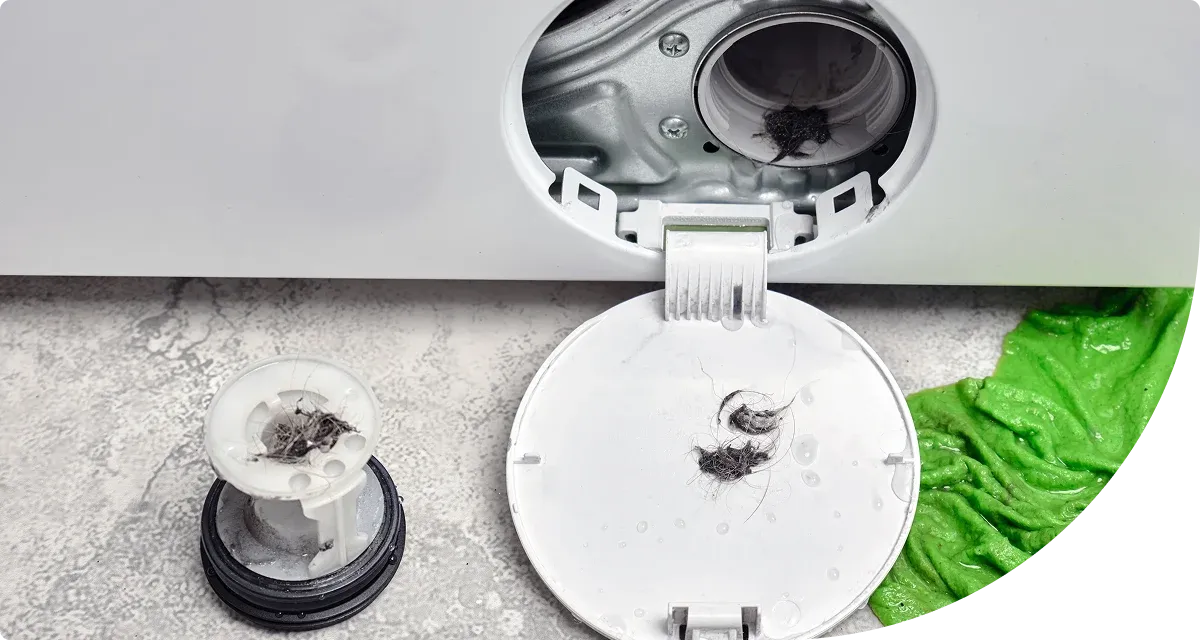
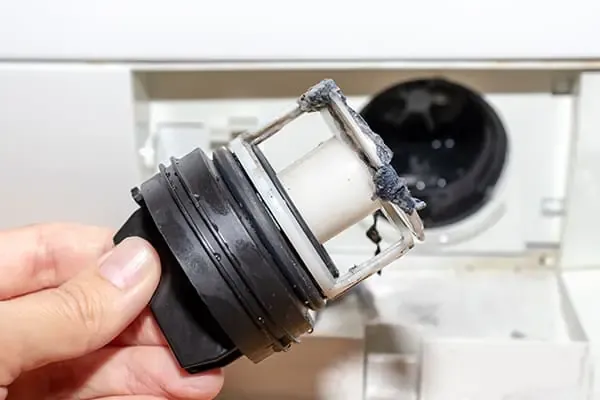
Most front-load washers and many newer top-loaders have a coin trap or pump filter at the bottom front. Unscrew it slowly (water will come out), clear out socks, coins, hair ties and lint, and spin the pump impeller with a finger to make sure it turns. On models without a filter, remove the hoses at the pump and check inside for small items. A pump that hums but doesn’t move water is almost always blocked. Our guide to clearing a clogged washer drain shows how to reach the pump behind the front panel.
Step 4: Inspect the Drive Belt (Belt-Drive Washers)
Many older top-loaders and some front-loaders use a belt between the motor and the transmission or pump. If the motor runs but the drum won’t spin and the water won’t drain, tip the washer back (empty first, with a helper) and look underneath. A belt lying in pieces on the floor of the cabinet is a common find.
- Note how the belt is routed, or take a photo of a diagram.
- Slip the new belt over the smaller pulley first, then work it onto the larger pulley by rotating it, keeping your fingers clear of pinch points.
- Run a drain and spin cycle to test.
Find out why it broke. Before you call it fixed, spin every pulley by hand. A wobbling pump pulley, a seized pump or a loose motor mount will shred a new belt within a load or two. Squealing on the first load after a belt replacement is a warning sign.
Step 5: Test or Replace the Drain Pump
If the pump is silent when it should be draining, check it with a multimeter: many pumps read roughly 10–20 ohms across their terminals, and no reading means the motor is dead. If it reads fine but gets no voltage during the drain cycle, the problem is upstream (lid switch, door lock or control board).
On many top-loaders the pump is easy to replace: remove the belt if your model has one, take off the two hose clamps and hoses, remove the mounting bolts (often three), fit the new pump, reconnect the hoses and refit the belt. Aftermarket pumps cost a fraction of factory parts but can vary in quality, so check reviews and watch for leaks in the first few weeks.
Step 6: Check the Lid Switch or Door Lock
A washer won’t spin unless it’s sure the lid or door is shut. If you can hear a click when you close the lid and the washer fills and agitates normally, the switch is probably working. If it fills but won’t spin, test the switch for continuity with the lid closed, and look for a broken plastic actuator on the lid. On front-loaders, a door lock that won’t engage usually shows an error code and stops the cycle.
Step 7: Rule Out Load, Suds and Settings
- Unbalanced load: a single heavy item (a bath mat or comforter) can stop the spin. Redistribute and rerun.
- Too many suds: regular detergent in an HE washer creates foam that the pump can’t move. Run a rinse cycle with no detergent.
- Settings: make sure a “no spin” or “drip dry” option isn’t selected.
- Reset: unplug the washer for one minute to clear a stuck control.
When It’s the Motor, Clutch or Control Board
If the belt and pump are fine but the drum still won’t spin, the cause may be a worn motor coupling (direct-drive top-loaders), a slipping clutch, a failed shift actuator (newer top-loaders), a transmission problem, or a control board fault. These need more diagnosis; an error code on the display is the best clue, and the tech sheet tucked inside the cabinet explains it.
What It Costs to Fix a Washer That Won’t Drain or Spin
Part prices are typical online prices; professional prices include parts and labor based on 2025–2026 U.S. repair-cost data.
| Repair | Part only (DIY) | With a technician |
|---|---|---|
| Clear hose, filter or pump clog | $0 | $100 – $200 |
| Drive belt | $10 – $40 | $120 – $250 |
| Drain pump | $25 – $100 | $150 – $350 |
| Lid switch or door lock | $20 – $90 | $150 – $300 |
| Motor coupling or shift actuator | $15 – $120 | $150 – $350 |
| Control board | $100 – $300 | $250 – $550 |
| Transmission or motor | $150 – $400 | $350 – $700+ |
Find a Washer Repair Pro
If the pump, belt and switch check out, or the washer shows an error code you can’t clear, a washer technician can find the fault quickly. Compare quotes before you book.
Find washer repair companies Get free quotes Same-day service
Questions and Answers
Why is my washer full of water and not spinning?
The washer can’t spin until it drains. A clogged pump filter, a kinked hose, a failed drain pump or a broken belt are the usual causes.
How do I reset a washer that won’t drain or spin?
Unplug it for one minute, plug it back in, and run a drain and spin cycle. If it still won’t drain, check for a blockage.
How do I drain a washer manually?
On front-loaders, use the emergency drain hose or pump filter at the lower front. On top-loaders, bail the water out or lower the drain hose into a bucket on the floor.
How do I know if my washer drain pump is bad?
A pump that’s silent during the drain cycle, reads no resistance on a multimeter, leaks, or has a wobbling pulley needs replacing. A humming pump that doesn’t move water is usually just blocked.
Can a broken belt stop a washer from draining?
Yes. On belt-drive washers, the same belt often turns the pump, so a broken belt stops both draining and spinning.
Why did my new washer belt break after one load?
Something is binding or misaligned, often a wobbling pump pulley, a seized pump or a loose motor mount. Fix that before fitting another belt.
Can a bad lid switch stop a washer from spinning?
Yes. The washer may fill and agitate but won’t spin unless the lid switch confirms the lid is closed.
How much does it cost to fix a washer not draining or spinning?
Clogs are free to clear yourself. Most part replacements cost $150–$350 with a technician; boards and transmissions cost more.
Is it worth fixing an old washer?
Often yes. Simple top-loaders are easy to repair, and belts, pumps and switches are inexpensive. Consider replacing only if the transmission or tub bearings fail on an older machine.
Can I use the washer if it isn’t spinning?
Not until it drains. Running more cycles with standing water can overflow or damage the pump.
The Bottom Line
To fix a washer not draining or spinning, unplug it, remove the water, and work through the hose, the pump filter, the belt, the lid switch and the drain pump in that order. When a belt breaks, check the pulleys and pump before fitting a new one, or it will break again. If those parts are fine, an error code and a technician’s diagnosis will point to the motor, clutch or control board.
About This Guide
This guide was written by David C, Senior Technical Writer at Repairior, based on hands-on appliance repair steps and reviewed by our editorial team. Designs vary by brand and model, so check your washer’s manual and tech sheet. Cost ranges reflect published 2025–2026 U.S. repair pricing, and we update our guides when pricing or best practices change.
Compare reviewed washer repair companies and request free quotes in minutes.