In this article
A clothes washer not draining is almost always one of two things: something is clogging the drain pump or drain hoses, or the pump itself has stopped working. In many cases the culprit is a sock, a small garment or loose stuffing that slipped past the tub and got sucked into the pump. This guide shows you how to remove the water, open the washer, find the pump and clear the blockage yourself, usually with nothing more than a nut driver and some towels.
Why Is My Clothes Washer Not Draining?
| Cause | What you’ll notice | Fix |
|---|---|---|
| Sock, small item or stuffing in the pump | Pump hums, water stays put | Clear the pump inlet and hoses |
| Clogged pump filter (coin trap) | Slow drain, error code on front-loaders | Unscrew and clean the filter |
| Kinked or clogged drain hose | Partial drain | Straighten or flush the hose |
| Blocked standpipe or house drain | Water backs up at the standpipe or sink | Snake the household drain |
| Failed drain pump | Silent during the drain cycle, or leaking | Replace the pump |
| Lid switch, door lock or control | Cycle stops before draining, error code | Test and replace the faulty part |
How Clothes End Up in the Drain
There is a small gap between the top rim of the wash basket and the outer tub. When a washer is overloaded, a sock, a baby garment or a mask can ride up over that rim and drop into the outer tub, where the water carries it straight to the pump. Washing items that shed, such as cushions that tear open, does the same thing with loose stuffing. It happens far more often than most people think, and it’s the first thing to check.
Step 1: Unplug and Remove the Water
Always unplug the washer before working on it. Then remove the water:
- A wet/dry shop vacuum is the fastest way to empty the tub.
- No shop vac? Bail the water out with a small pail, then soak up the last bit with towels.
- On a front-loader, drain through the emergency hose or pump filter behind the small lower front panel, with a shallow pan and towels underneath.
Step 2: Check the Pump Filter (If Your Washer Has One)
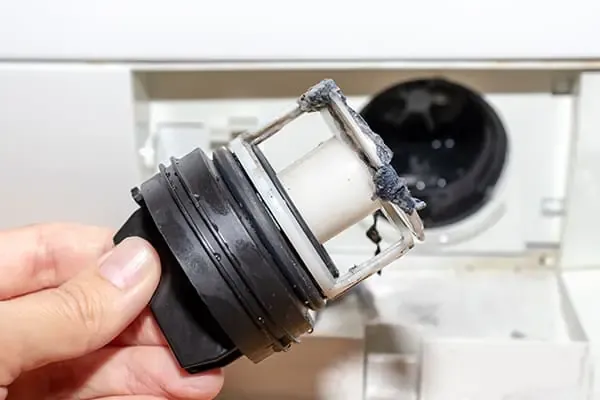
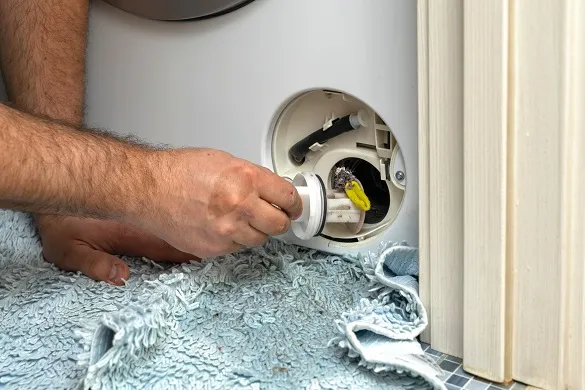
Most front-loaders and many newer top-loaders have a pump filter behind a small access door at the bottom front. Unscrew it slowly, let the water run into a pan, and clear out lint, coins, hair ties and small clothing. Turn the pump impeller with a finger to make sure it spins freely, then screw the filter back in firmly so it doesn’t leak.
Step 3: Remove the Front Panel to Reach the Pump
On many top-load washers, the pump sits behind the front panel at the bottom of the cabinet:
- Find the two fasteners at the bottom of the front panel, one on each side (often 5/16-inch nuts or screws).
- Remove them with a nut driver, socket or flat screwdriver.
- Lift the panel up and off its upper clips.
Pump location varies: it may be in a corner or in the center. The easy way to find it is to follow the drain hoses; they lead straight to the pump.
Step 4: Clear the Drain Hoses and Pump
- Put towels or a pan under the hose connection. Expect a fair amount of leftover water.
- Loosen the hose clamp (squeeze spring clamps with pliers, or loosen the screw on a worm clamp) and pull the hose off the pump.
- Look into the hose and the pump inlet. Pull out socks, stuffing, lint or debris. Needle-nose pliers help.
- Check the outlet hose to the standpipe too, and flush it with water if it’s packed with lint.
- Reattach both hoses, tighten the clamps, and give each hose a firm tug to make sure it’s secure.
Step 5: Reassemble and Test
Refit the front panel, lining up any tabs with the notches on the cabinet, and reinstall the fasteners. Dry the floor, plug the washer in and run a short wash or drain-and-spin cycle. When it finishes, open the lid and confirm the tub is empty. Check under the washer for drips at the hose connections.
If Nothing Was Clogged: Test the Drain Pump
Listen during the drain cycle. A pump that hums but moves no water is still blocked somewhere, often inside the pump body. A completely silent pump either has failed or isn’t getting power.
- Unplug the washer and test the pump motor with a multimeter on ohms. Many pumps read roughly 10–20 ohms; no reading means the motor is dead.
- If the pump tests good, the problem is upstream: the lid switch, door lock, wiring or control board. An error code on the display will point you in the right direction.
- Replacing a pump usually means removing two hose clamps and two to three mounting screws, plus the wire connector.
If your washer also won’t spin, see our guide to a washer that won’t drain or spin, which covers belts, lid switches and drive problems.
How to Keep It From Happening Again
- Don’t overload the washer; leave room for clothes to move freely.
- Wash socks, baby clothes and small items in a mesh laundry bag.
- Empty pockets every time, and zip zippers and fasten hooks.
- Check cushion covers and stuffed items for tears before washing, or wash them by hand.
- Clean the pump filter every month or two on front-loaders.
- Use HE detergent in HE washers to avoid excess suds.
Washer Drain Repair Costs
Part prices are typical online prices; professional prices include parts and labor based on 2025–2026 U.S. repair-cost data.
| Repair | DIY | With a technician |
|---|---|---|
| Clear a pump or hose clog | $0 | $100 – $200 |
| Drain hose replacement | $10 – $30 | $100 – $180 |
| Drain pump replacement | $25 – $100 | $150 – $350 |
| Lid switch or door lock | $20 – $90 | $150 – $300 |
| Household drain or standpipe snaking | $0 – $30 | $150 – $300 (plumber) |
Find a Washer Repair Pro
If you’d rather not open the cabinet, or the pump and switches test good and it still won’t drain, a washer technician can diagnose it in one visit. If water is backing up at the standpipe, call a plumber instead.
Find washer repair companies Get free quotes Same-day service
Questions and Answers
What is the most common reason a washing machine won’t drain?
A blockage in the pump or drain hose, very often a sock or small garment that slipped past the tub. A failed pump is the next most common cause.
How do I unclog my washer drain myself?
Unplug the washer, remove the water, take off the front panel or pump filter cover, and pull the blockage out of the pump inlet and hoses.
Where is the drain pump on a washing machine?
At the bottom of the cabinet, usually behind the front panel or lower access door. Follow the drain hoses to find it.
How do I get water out of a washer that won’t drain?
Use a wet/dry vacuum, bail it with a pail and towels, or on a front-loader drain it through the emergency hose behind the lower front panel.
Can a sock really clog a washing machine?
Yes. Socks and small items can slip over the top of the basket, especially in overloaded washers, and end up in the pump.
Why does my washer hum but not drain?
The pump motor is running but something is jamming the impeller or blocking the hose. Clear the pump and hoses.
Will a clogged house drain stop my washer from draining?
Yes. If water backs up out of the standpipe or into a laundry sink, the household drain is clogged and needs snaking.
How much does it cost to fix a clothes washer not draining?
Clearing a clog is free if you do it yourself. A technician typically charges $100–$200 for a clog and $150–$350 to replace a drain pump.
How often should I clean the washer pump filter?
Every one to two months on front-loaders, or sooner if you notice slow draining or water left in the drum.
Is it safe to run a washer that isn’t draining?
No. Running more cycles can overflow the tub or burn out the pump. Fix the drain problem first.
The Bottom Line
For a clothes washer not draining, start by looking for a blockage: unplug the washer, remove the water, open the front panel or pump filter, and clear the pump and hoses. Most of the time a sock, small garment or stuffing is to blame. If nothing is clogged, test the pump and the switches that feed it, and prevent repeats by not overloading the drum and using mesh bags for small items.
About This Guide
This guide was written by David C, Senior Technical Writer at Repairior, based on hands-on appliance repair steps and reviewed by our editorial team. Panel and pump layouts vary by brand and model, so check your washer’s manual. Cost ranges reflect published 2025–2026 U.S. repair pricing, and we update our guides when pricing or best practices change.
Compare reviewed washer repair companies and request free quotes in minutes.