In this article
Bleach seems like the obvious answer when a dishwasher smells or shows mold. But before you pour it in, it’s worth knowing that bleach can permanently damage some dishwashers and is dangerous when it meets certain other cleaners. So, can I put bleach in my dishwasher? Only if it has a plastic interior and your owner’s manual allows it, only a small amount, and never with vinegar or a stainless steel tub. For most modern dishwashers, vinegar, dish soap and a dishwasher cleaner tablet do the job more safely.
The Repairior editorial team put this guide together from manufacturer care guidance, poison control and EPA cleaning safety advice, and the cleaning routine appliance technicians recommend.
Is It Safe to Put Bleach in a Dishwasher?
| Your dishwasher | Can you use bleach? | Why |
|---|---|---|
| Plastic tub, manual doesn’t prohibit it | Occasionally, in small amounts | Bleach disinfects and lifts mold stains on plastic |
| Stainless steel tub | No | Chlorine can pit, corrode and discolor stainless steel |
| Manual says no bleach | No | Can void the warranty or damage seals and parts |
| Vinegar or cleaner used recently | Not until fully rinsed | Mixing creates harmful gases |
| Racks with chipped coating | Not recommended | Bleach speeds rust on exposed metal |
How to tell if your dishwasher tub is stainless steel
Open the door and look at the inner walls. A shiny, metallic, brushed-steel surface is stainless. A smooth white, gray or almond surface is usually plastic. Many newer dishwashers, including most Bosch, KitchenAid and higher-end GE and Maytag models, have stainless tubs. If in doubt, check the owner’s manual for your model number.
Never Mix Bleach With These
Poison control centers and the U.S. EPA warn that mixing bleach with certain products releases toxic gases. In a dishwasher, the risky combinations are:
- Vinegar or other acids: releases chlorine gas.
- Ammonia-based cleaners: release chloramine vapors.
- Dishwasher detergents or cleaner tablets in the same cycle: some contain ingredients that react with bleach, and they’re not designed to work together.
- Rubbing alcohol: can form harmful compounds.
If you cleaned with vinegar, run a plain hot rinse cycle first, and use bleach on a different day.
How to Clean a Dishwasher With Bleach (Plastic Tubs Only)
Step 1: Confirm bleach is allowed
Check that your tub is plastic and that your manual doesn’t warn against chlorine bleach. Remove any dishes, especially silverware and anything with metal trim, which bleach can tarnish.
Step 2: Clean the filter and seals first
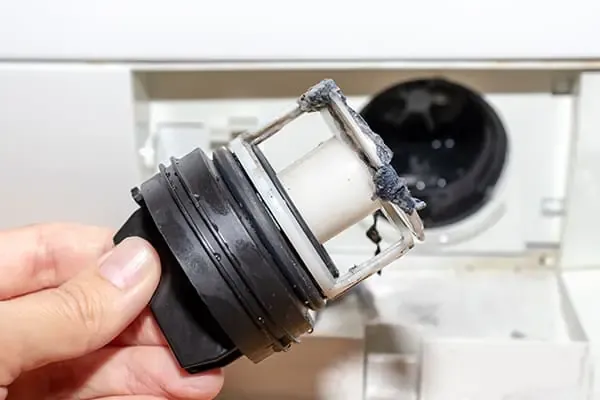
Bleach won’t clear clogged food. Remove the filter, soak and scrub it in hot water with dish soap, and scrub the door edges, gasket and bottom lip of the door with a soft brush and soapy water. Rinse everything with clean water. Don’t use vinegar in this step if you plan to use bleach the same day. For the full routine, see how to clean a dishwasher.
Step 3: Treat mold spots (optional)
For visible mold on a plastic tub or gasket, mix about 1 tablespoon of bleach in 1 cup of water, apply with a cloth, wait 5–10 minutes and wipe off with clean water. Wear gloves and ventilate the kitchen.
Step 4: Run the bleach cycle
- Place a dishwasher-safe bowl upright on the top rack.
- Pour in about 1 cup of regular, unscented chlorine bleach. Don’t use splash-less or scented bleach, which can foam.
- Close the door and run a normal or heavy wash cycle on the hottest setting, with heated dry turned off.
Step 5: Rinse and air dry
When the cycle ends, run one more empty rinse cycle to clear any bleach residue. Leave the door open so the tub dries completely.
Safer Alternatives to Bleach
| Option | Best for | Safe on stainless? |
|---|---|---|
| Dishwasher cleaner tablet (citric acid) | Grease, food film, hard water | Yes |
| Cup of white vinegar on the top rack | Hard water film, odors, light mold | Yes, occasionally |
| Baking soda on the tub floor | Freshening odors | Yes |
| Baking soda paste and vinegar spray | Scrubbing mold on seals and racks | Yes |
| 3% hydrogen peroxide | Spot-treating stained gaskets | Yes, rinse after |
For stubborn black or pink mold, our guide on how to clean a moldy dishwasher walks through cleaning seals and rack rails without bleach.
Can You Wash Dishes With Bleach in the Dishwasher?
Don’t add bleach to a regular load of dishes. Detergent and hot water already clean and sanitize dishes; many dishwashers have a Sanitize cycle that heats water high enough to kill most bacteria. Bleach can also react with detergent, damage metal and leave residue on dishes.
What Bleach Can Damage in a Dishwasher
- Stainless steel tubs: pitting, rust spots and discoloration.
- Rubber gaskets and seals: repeated use can dry and crack them, causing leaks.
- Rack coating: speeds rusting where the coating is chipped.
- Silverware and metal trim: tarnishing and pitting.
When a Smelly or Moldy Dishwasher Needs Repair
If odor or mold keeps coming back after a full clean, the cause may be a drain problem, standing water, a worn door gasket or a leak. A technician can check the drain pump, hose and seals.
Find Dishwasher Repair Near You
Browse dishwasher repair companies · Get free dishwasher repair quotes · Dishwasher repair service guide

Leads Lancer
MonsterInsights, the #1 WordPress Analytics Plugin, helps you easily connect your website to Google Analytics, so that you can see how people find and use your website. Over 3 million website owners use MonsterInsights to see the stats…

Helply Appliance Repair Inc.
Helply Appliance Repair Inc. is listed on Estaril Circle in north Houston, near the Greenspoint and Aldine areas. The company handles washer and dryer repair along with dishwasher repair, range and stove repair, cooktop repair and microwave repair,…
Mega Appliance Repair
This Mega Appliance Repair team covers west Houston, near the Memorial and Spring Branch West areas, providing dishwasher repair, refrigerator repair, freezer repair and dryer repair for homeowners. Phones are answered around the clock Monday through Saturday, with…

Fast Appliance Solutions
Fast Appliance Solutions is located on Story Street in Spring Branch, a short drive from the Katy Freeway and Loop 610. The company handles refrigerator repair, dryer repair and dishwasher repair for Houston homeowners, focusing on getting everyday…

Houston Pro Appliance Repair
Houston Pro Appliance Repair is based on Kailua Drive in Hockley, on the far northwest edge of the Houston area. The company offers appliance repair for local homes and appears in searches for dishwasher repair and oven repair,…

Amerijam Appliance Repair
Amerijam Appliance Repair operates from Wortham Center Drive in northwest Houston, near the Willowbrook and Jersey Village area. The company provides dishwasher repair, stove repair, washer and dryer repair and dryer vent cleaning for homes, giving local residents…
Bleach and Dishwashers: Frequently Asked Questions
Can I put bleach in my dishwasher?
Only if it has a plastic tub, the manual allows it, and no vinegar or other cleaner is in the machine. Use about 1 cup in a bowl on the top rack of an empty dishwasher and run a hot cycle without heated dry.
Can you clean a stainless steel dishwasher with bleach?
No. Bleach can pit and discolor stainless steel. Use a dishwasher cleaner tablet or white vinegar instead.
Does bleach kill mold in a dishwasher?
Bleach kills mold on non-porous surfaces like plastic tubs, but it isn’t safe for stainless steel. Vinegar, baking soda and hydrogen peroxide work well on most dishwashers.
Can I use bleach and vinegar together in a dishwasher?
Never. Mixing bleach and vinegar releases chlorine gas. Use them on different days with a rinse cycle in between.
How much bleach should I put in my dishwasher?
About 1 cup of regular unscented bleach in a bowl on the top rack is the commonly used amount for a cleaning cycle in a plastic-tub dishwasher.
How often can I clean my dishwasher with bleach?
Rarely, only when needed for mold on a plastic tub. For monthly cleaning, use a dishwasher cleaner tablet, which is gentler on seals.
Related Guides
- How to Clean a Dishwasher
- How to Clean a KitchenAid Dishwasher
- How to Clean a Frigidaire Dishwasher
- How to Clean a Moldy Dishwasher
- How to Clean a GE Dishwasher
- Dishwasher Repair Houston
- Appliance Repair Houston
Conclusion
- Bleach is only an option for plastic-tub dishwashers whose manual allows it.
- Never use bleach in stainless steel tubs or mix it with vinegar, ammonia or detergent.
- Clean the filter and seals first, then run 1 cup of bleach on a hot cycle without heated dry, followed by a rinse.
- For most dishwashers, a dishwasher cleaner tablet or white vinegar is the safer monthly choice.
- Recurring smells or mold can signal a drain or seal problem. Get free quotes from a local technician.
About This Guide
Editorial policy
Written and reviewed by the Repairior Editorial Team using appliance manufacturer guidance, U.S. EPA and poison control safety information and standard appliance service practice. Businesses cannot pay to be featured in our how-to content.
Content transparency
Dishwasher materials and manufacturer advice vary. Always follow your owner’s manual and the bleach label. If someone is exposed to mixed cleaning chemicals, contact Poison Control (1-800-222-1222 in the US) or emergency services. Repairior earns revenue from optional business plans, which do not affect this guide.
About the author
David C is part of the Repairior Editorial Team, which researches home appliance care and repair and works with local repair businesses across the US.
Helpful official resources: Poison Control: mixing household chemicals, EPA mold guidance and CDC mold and health.
Compare dishwasher repair technicians near you and request free quotes in minutes.