In this article
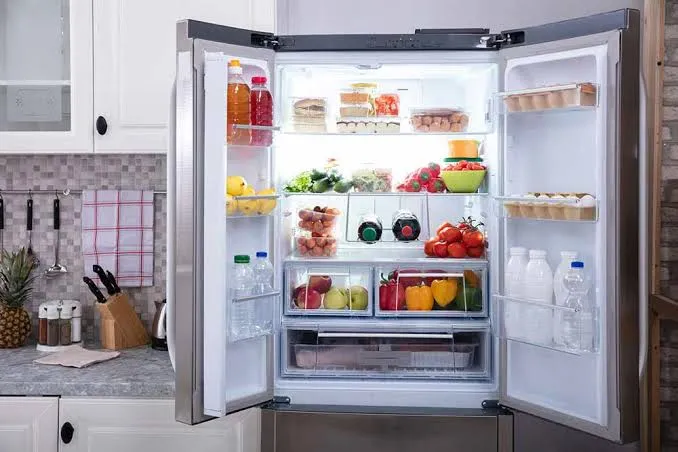
An LG refrigerator not cooling usually comes down to one of four things: a stopped fan, a defrost fault that has iced up the evaporator, a failed main control board, or a weak linear compressor. The quickest way to narrow it down is to ask one question first: is the fridge side warm, the freezer warm, or both? The answer tells you where to look, and the checks below take you from the easy fixes to the ones that need a technician.
Why Is My LG Refrigerator Not Cooling? Start With Which Side
| What’s warm | Most likely causes | Where to look |
|---|---|---|
| Fridge only (freezer fine) | Fridge evaporator fan, iced coil, damper, sensor | Panel at the back of the fresh-food section |
| Freezer only | Freezer fan, defrost heater or sensor | Panel at the back of the freezer drawer |
| Both compartments | Dirty condenser coils, condenser fan, main board, compressor, refrigerant | Behind the lower rear panel |
Step 1: Read the Frost on the Evaporator
Unplug the fridge, take out the shelves, and remove the evaporator cover (usually two to three screws, some hidden under small caps). In the freezer, take out the drawer by removing a screw on each side and lifting it out; on some models you also remove a slide rail. If the panel is frozen in place, defrost first. Before removing wires, take a photo, and check behind connectors for moisture damage.
The frost pattern tells you a lot:
- Light, even frost across the coil: normal. The sealed system is working.
- No frost at all: the compressor isn’t pumping refrigerant. Check the board and compressor (Steps 4–5).
- Heavy frost only where the lines enter the coil: a sign of low refrigerant, which needs a technician.
- Thick ice covering the whole coil: the defrost system has failed (heater or sensor).
For heavy ice, test the defrost heater for continuity and the defrost sensors (thermistors) for resistance with a multimeter, comparing the reading with the resistance chart for your model. A sensor that reads out of range makes the board think the coil is already warm, so it skips or cuts short the defrost cycle.
Step 2: Test the Fans the Right Way
LG’s interior fans switch off whenever a door is open, so you can’t judge them by opening the door and looking. Use one of these tricks:
- Hold magnets against the door hinges where the reed switches sit, so the fridge thinks the doors are closed.
- Put a phone inside recording video, close the doors and listen. The fans should start within 30–45 seconds.
- Use test mode on the main board (Step 4), which forces every fan to run.
A fan that doesn’t run, or an error code on the display such as Er FF (freezer fan) or Er rF (fridge fan), means the fan motor or its wiring needs attention. If ice is jamming the blade, fix the defrost problem as well, or the new fan will freeze up again.
Step 3: Clean the Coils and Check the Condenser Fan
If both compartments are warm, pull the fridge out and remove the lower rear panel (usually six to eight screws). You’ll see the compressor, condenser coil and condenser fan. The fan should run whenever the fridge is cooling, except during defrost. Clean dust off the coil with a condenser brush, or blow it out with compressed air while a vacuum catches the debris. Replace the fan motor if it won’t spin freely or doesn’t start.
Step 4: Use the Board’s Test Mode
Remove the cover over the main control board (often just above the compressor area). First, check the board’s fuses with a multimeter: a good fuse reads close to 0 ohms; “OL” means it’s blown. A blown fuse can stop all cooling without any error code. Some fuses can be replaced; others are soldered to the board.
Then reset and test:
- Unplug the fridge for 30 seconds, plug it back in and wait about a minute.
- Press the test button once (one beep): Test 1 runs the compressor and all fans at full speed. Touch the compressor; it should vibrate. If the board won’t enter test mode at all, the board is likely faulty.
- Press it again: Test 2 closes the damper and runs only the freezer, which helps isolate a damper or fan fault.
- Press a third time (often shows “33”): forced defrost. The compressor and fans stop while the heater runs, and you may hear ice crackling.
- Press once more to return to normal. The power cycle and test sequence alone sometimes get a fridge running again.
LED blink codes
Many LG boards have a small LED that blinks a code (it can be hard to see, so dim the room lights). Blink counts of 1, 4, 6, 7 or 8 usually point to the board or a loose wire. Counts of 2, 3 or 5 usually point to the compressor or sealed system, which is not a DIY repair.
Step 5: Check the Compressor (Advanced)
These tests involve live voltage. Skip them unless you’re experienced and wearing insulated gloves.
- Drive voltage: in Test 1, measure AC voltage at the compressor connector on the board (often labeled CON201). A healthy reading is roughly 160–185 V AC. Well below that, especially under 120 V, points to a bad board.
- Current draw: with an amp clamp around one compressor wire, a running compressor typically draws about 0.5–0.7 amps. Readings outside that range suggest low refrigerant or a failing compressor.
- Line temperatures: the line leaving the compressor and the condenser coil should feel clearly warmer than the room, while the copper suction line returning to the compressor should feel cooler. Aim for about a 20°F difference. If all three are room temperature, there’s no refrigerant moving.
LG Compressor Warranty: Check Before You Pay
LG’s linear and inverter compressors have had well-known failure problems, and LG typically covers the compressor part for 10 years, with extended coverage for some models after a class-action settlement. Call LG before hiring an independent technician; they can confirm your coverage and send an authorized servicer.
To find the age, check the label inside the fresh-food section. The first digit of the serial number is the last digit of the year, and the next two digits are the month: a serial starting with 603 was made in March 2016.
If a technician replaces the compressor, ask exactly what they will do. A proper repair includes a new compressor and filter drier, a leak search (pressure test or UV dye), evacuation and a correct recharge. Skipping the leak check is the main reason the problem comes back.
LG Fridge Repair Costs
Prices include parts and labor, based on 2025–2026 U.S. repair-cost data and typical technician pricing.
| Repair | Typical cost |
|---|---|
| Diagnostic visit | $75 – $150 |
| Evaporator or condenser fan motor | $150 – $400 |
| Defrost heater or sensor | $150 – $400 |
| Main control board | $300 – $650 |
| Compressor, labor only (part under warranty) | $500 – $800 |
| Compressor and sealed system, out of warranty | $800 – $1,500+ |
Find an LG Refrigerator Repair Pro
If test mode or the blink code points to the compressor or sealed system, or the board shows low drive voltage, it’s time for a technician. Compare quotes and ask whether they handle warranty-covered compressor work.
Find refrigerator repair companies Get free quotes Same-day service
Questions and Answers
Why is my LG refrigerator not cooling but the freezer is cold?
The fresh-food fan, damper or evaporator isn’t moving cold air. Check for ice on the fridge evaporator and test the fan with the doors closed, since the fans stop when a door is open.
How do I reset an LG fridge that’s not cooling?
Unplug it for 30 seconds and plug it back in. On many models, running the board’s test button through all modes and back to normal acts as a deeper reset.
How do I put an LG fridge in forced defrost?
Press the test button on the main board three times. The display often shows “33” and the heater runs while the compressor and fans stay off.
What does Er FF or Er rF mean on an LG refrigerator?
Er FF is a freezer fan error and Er rF a fridge fan error. Ice blocking the fan or a failed fan motor are the usual causes.
Why is my LG fridge running but not cold?
If you hear the compressor but nothing gets cold, check for clogged condenser coils, a stopped condenser fan, or a refrigerant problem shown by little or no frost on the evaporator.
Is the LG linear compressor covered by warranty?
The compressor part typically has 10-year coverage, and some models got extended coverage through a class-action settlement. Contact LG with your model and serial number.
How can I tell how old my LG fridge is?
Look at the serial number: the first digit is the year and the next two are the month. “603” means March 2016.
How much does it cost to fix an LG refrigerator not cooling?
Fan or defrost repairs usually cost $150–$400, a main board $300–$650, and an out-of-warranty compressor $800–$1,500 or more.
How long should an LG fridge take to cool down?
About 6–12 hours to reach a safe temperature after a reset or defrost, and up to 24 hours to stabilize fully.
Is it worth fixing an LG fridge with a bad compressor?
If LG covers the compressor and the technician does a full repair with a new filter drier and leak check, it can last many more years. Without warranty coverage, compare the quote with a new fridge.
The Bottom Line
Diagnose an LG refrigerator not cooling by first noting which compartment is warm. Read the evaporator frost, test the fans with the doors closed, clean the condenser coils, and use the board’s test mode and blink codes to separate a bad board from a compressor problem. Check your warranty before paying for compressor work. For causes that apply to every brand, see our guide on why a fridge stops cooling, or our Samsung fridge cooling guide.
About This Guide
This guide was written by David C, Senior Technical Writer at Repairior, based on hands-on appliance diagnostics and reviewed by our editorial team. Test-mode steps, codes and readings vary by model, so check your model’s service sheet. Cost ranges reflect published 2025–2026 U.S. repair pricing, and we update our guides when pricing or best practices change.
Compare reviewed refrigerator repair companies and request free quotes in minutes.