In this article
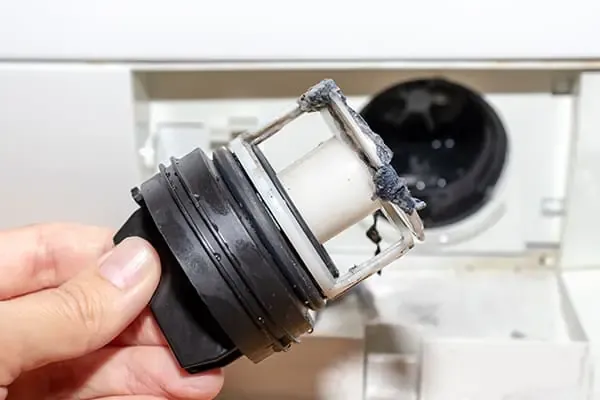
A Whirlpool washer not draining usually shows the same pattern: the cycle stops near the end, you can hear the drain pump running, a little water trickles out, and the door stays locked with an error code on the display. Most of the time something is blocking the coin trap, the pump or a drain hose. If the drain is clear, a sticking door lock or a glitch in the control can keep the washer stuck in drain mode. This guide covers both, with the steps for Whirlpool front-load washers first and notes for top-loaders.
Why Is My Whirlpool Washer Not Draining?
| Cause | Clue | DIY? |
|---|---|---|
| Debris in the coin trap or pump | Pump hums, water stays, long-drain error code | Yes |
| Clog in the tub-to-pump hose | Coin trap is clean but water won’t move | Yes |
| Kinked or clogged drain hose or standpipe | Slow or partial drain | Yes |
| Stuck check valve or impeller | Pump runs, nothing exits | Yes |
| Failed drain pump | Silent pump during drain | Usually |
| Door lock or control glitch | Door stays locked, drain keeps running with no water | Usually |
| Too many suds | Foam in the drum, slow drain | Yes |
A long-drain error (often shown as F9 E1 or F21 depending on the model) means the control expected the water to be gone and it isn’t. Unplugging the washer may clear the code briefly, but it will come back until the cause is fixed.
Step 1: Open the Washer and Clear the Coin Trap
On many Whirlpool front-loaders the coin trap sits at the bottom of the cabinet and is easiest to reach from the back. On others it’s behind a small door at the lower front.
- Unplug the washer and pull it away from the wall.
- Remove the rear panel by taking out the 1/4-inch screws around its edge. Leave any screws in cutaway slots; they don’t hold the panel.
- Find the coin trap: a round cap on the pump housing near the bottom. On direct-drive models you’ll see the motor on the back of the tub; there is no belt.
- Prepare for water. Lay towels or a shallow pan underneath. If the washer has a base drawer, leaking water may collect there.
- Turn the cap counterclockwise slowly and let the water drain out, then remove it.
- Clear the trap of coins, socks, hair ties, lint and buttons, and reach into the opening to feel for anything lodged further in.
Step 2: Check the Hoses and Pump for Clogs
If the coin trap is clean, the blockage is often in a hose. Items tend to get stuck wherever the hose turns.
- Tub-to-pump hose: loosen the spring clamp with pliers, twist the hose toward you and pull it off. Look inside for debris.
- Pump outlet and drain hose: remove the hose where it leaves the pump. Blow through it, or run water through it, to confirm it’s clear all the way to the standpipe (keep your mouth protected from wastewater, or use compressed air).
- Check valve: many pumps have a small one-way valve at the outlet. Push it with a finger to make sure it moves freely.
- Impeller: reach into the pump with a finger and feel the impeller vanes; they should turn without anything wrapped around them.
Reinstall each hose and squeeze the clamps fully back over the connection. Hose-clamp pliers make this easier, but standard pliers work.
Step 3: Reinstall the Coin Trap and Test
Wipe the threads clean, insert the coin trap and turn it clockwise until the locking tab stops it. A loose cap will leak. Leave the rear panel off for now, plug the washer in and select Drain & Spin. Watch the pump and hose connections for leaks while it runs and confirm the water drains and the drum spins up.
Step 4: If the Drain Is Clear but the Door Stays Locked
Sometimes the drain is perfectly clear, yet the washer keeps the door locked and the pump running. That points to the door lock or a control glitch rather than a clog.
- Unplug the washer.
- Remove the screws at the back of the top panel, slide the top back and lift it off. If a dryer is stacked on top, you’ll need to move the dryer first; get a helper or slide it onto a sturdy stand.
- Look down behind the front panel for the white door lock assembly. Pull up the small round release on top of it to unlock the door manually.
- Plug the washer back in. You may hear a relay click as the control resets.
- Run Drain & Spin, then a short cycle, and watch whether the door unlocks normally at the end.
If the problem returns, replace the door lock. It’s an inexpensive part, reached from the front by folding back the door boot seal and removing a few screws.
While the top is off, you’ll also see the pressure switch (which senses the water level through a small air hose), the fill valves and the main control. Gently unplugging and reseating each connector at the control can clear a poor connection.
Use the Tech Sheet and Diagnostic Mode
Most Whirlpool washers have a technical sheet tucked under the top panel or behind the console. It explains how to enter diagnostic mode, run component tests (pump, door lock, motor) and read stored fault codes for your exact model. It’s the fastest way to confirm whether the pump or door lock has failed.
What Normal Draining and Spinning Look Like
After you fix a drain problem, it helps to know what’s normal. The washer locks the door, senses the load by turning the drum, and runs the pump while it spins. It may reverse direction a few times to balance the load before picking up speed. If it detects too much shaking, it will slow down and redistribute rather than spin fast. That’s normal load balancing, not a fault. Once the drum stops, the door should unlock within a minute or two.
Whirlpool Top-Load Washers
On Whirlpool top-loaders, the pump is usually behind the front panel or under the cabinet, and there’s no coin trap. The same idea applies: unplug, remove the water, follow the drain hoses to the pump and clear any socks or debris. Our guide to a clothes washer that won’t drain walks through that process, and the drain and spin guide covers belts and lid switches.
Whirlpool Washer Drain Repair Costs
Part prices are typical online prices; professional prices include parts and labor based on 2025–2026 U.S. repair-cost data.
| Repair | Part only (DIY) | With a technician |
|---|---|---|
| Clear coin trap or hose clog | $0 | $100 – $200 |
| Drain pump | $40 – $120 | $180 – $350 |
| Door lock assembly | $40 – $100 | $150 – $300 |
| Drain hose | $15 – $40 | $100 – $180 |
| Pressure switch | $30 – $80 | $150 – $280 |
| Main control board | $150 – $350 | $300 – $600 |
Find a Washer Repair Pro
If the drain is clear and the washer still won’t finish its cycle, or you’d rather not move a stacked dryer, a washer technician can run the diagnostic tests and replace the failed part.
Find washer repair companies Get free quotes Same-day service
Questions and Answers
Where is the drain filter on a Whirlpool washer?
On many front-loaders the coin trap is at the bottom, reached through the rear panel or a small lower front door. Top-loaders usually have no filter.
How do I reset my Whirlpool washer?
Unplug it for at least one minute, then plug it back in and run Drain & Spin. If an error code returns, the underlying problem still needs fixing.
How do I unlock a Whirlpool washer door that won’t open?
Unplug the washer, remove the top panel and pull up the release on top of the door lock assembly. Only do this after the water has been drained.
What does the long-drain error mean on a Whirlpool washer?
The washer couldn’t empty the water in the expected time. Check the coin trap, hoses and pump for clogs first.
Why is my Whirlpool washer pump running but not draining?
Something is blocking the coin trap, the impeller or a hose, or the check valve is stuck. Clear the blockage and test again.
Can a bad door lock stop a Whirlpool washer from draining?
It can keep the cycle from finishing, so the washer keeps draining and the door stays locked even when the tub is empty.
How often should I clean the coin trap?
Every few months, or whenever draining slows. Always check pockets before washing to keep coins and small items out.
How much does it cost to fix a Whirlpool washer not draining?
Clearing a clog yourself is free. A technician typically charges $100–$200 for a clog and $180–$350 for a new pump.
Why does my Whirlpool washer shake and stop spinning?
It’s balancing the load. If it senses too much movement, it slows down and tries again. Redistribute heavy items or run a smaller load.
Do I need to remove a stacked dryer to fix my washer?
Only to remove the washer’s top panel, for example to release the door lock. The coin trap and pump are reached from the back or bottom.
The Bottom Line
For a Whirlpool washer not draining, unplug it, open the back, and clear the coin trap, the hoses and the pump. Reinstall everything, check for leaks and run Drain & Spin. If the drain is clear but the door stays locked and the cycle won’t finish, release the lock manually, reset the washer and plan to replace the door lock if it happens again.
About This Guide
This guide was written by David C, Senior Technical Writer at Repairior, based on hands-on appliance repair steps and reviewed by our editorial team. Panel layouts and error codes vary by model, so check your washer’s tech sheet. Cost ranges reflect published 2025–2026 U.S. repair pricing, and we update our guides when pricing or best practices change.
Compare reviewed washer repair companies and request free quotes in minutes.