In this article
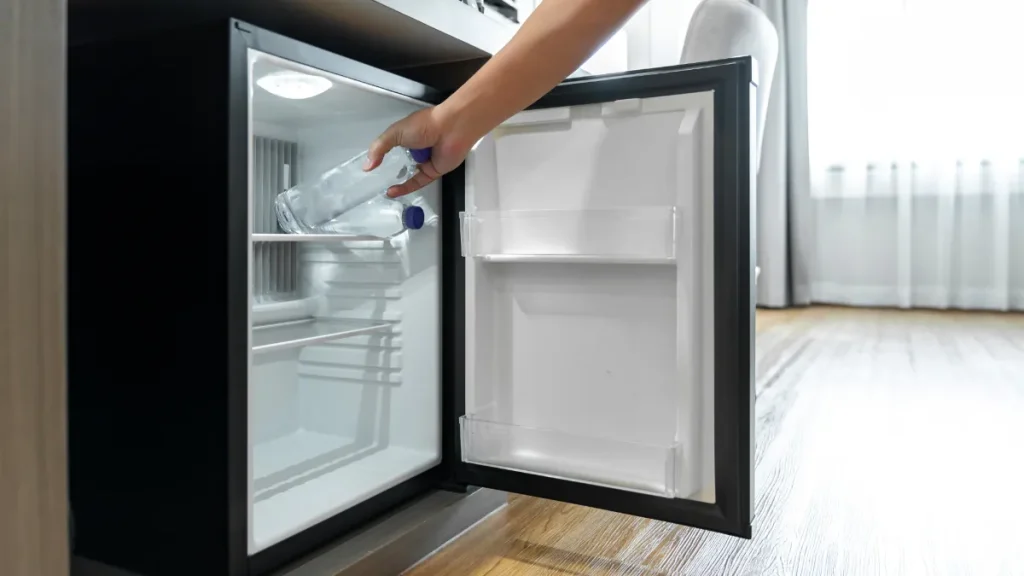
A Frigidaire refrigerator not cooling in the fresh-food section, while the freezer still works, very often comes down to one small part: the air damper. It’s a motorized flap that lets cold air flow from the freezer into the fridge. If it freezes shut or its motor fails, the fridge side warms up and many models start beeping and show an H1 (high temperature) code. This guide shows how to check the damper and replace it, then covers the other common causes if the damper isn’t the problem.
Why Is My Frigidaire Refrigerator Not Cooling?
| Symptom | Likely cause |
|---|---|
| Fridge warm, freezer cold, no air from the fridge vent, H1 code | Air damper frozen shut or damper motor failed |
| Fridge warm, freezer cold, no fan noise in the freezer | Evaporator fan motor |
| Thick frost on the freezer back panel | Defrost heater, thermostat or control |
| Both sections warm, compressor hot, rear fan stopped | Condenser fan motor or dirty condenser coils |
| Clicking every few minutes, compressor won’t run | Start relay or compressor |
| Food freezing in the fresh-food section | Damper stuck open or a faulty thermistor |
What the H1 Code and Beeping Mean
On many Frigidaire models, the display shows H1 and the fridge beeps when the fresh-food temperature rises too high. It often happens after the door has been left open for a long time, such as while unloading groceries. Warm, humid air gets in, condensation forms, and it can freeze around the damper overnight. Unplugging the fridge for 10 seconds may clear the code, but if it comes back within minutes, the fridge really is running warm.
Step 1: Check for Airflow From the Damper
The damper sits behind a grille near the top of the back wall in the fresh-food section, usually inside the control housing. With the fridge running, reach behind the grille and feel for cold air.
- No air, but you can hear the freezer fan: the damper is probably closed.
- No air and no fan noise: the evaporator fan in the freezer may have failed (see Step 4).
A small mirror and a flashlight can help you see whether the flap is open or closed.
Step 2: Remove the Control and Damper Housing
For safety, unplug the fridge before taking anything apart.
- Take out the top shelf: tilt it up at the front, lift and pull it out.
- Remove the screws holding the housing to the ceiling of the fresh-food section (often five 1/4-inch screws: one at the back, one in the middle and three at the front). Support the housing as you remove the last screw.
- Lower the front, then slide the back out. The white rod that comes with it is the thermistor (temperature sensor), which sits in a hole leading toward the freezer.
- Unplug the two connectors: press the tab on the smaller plug, and pinch the tabs on both sides of the larger plug.
- Lift the whole assembly out and set it on a towel.
Step 3: Check and Free (or Replace) the Damper
Inside the housing you’ll see the damper flap. If it’s closed:
- Frozen shut: if condensation has frozen the flap to the housing, ease it free with a flat screwdriver and push it open. Once it moves, airflow should return.
- Closed but not frozen: if the flap is stuck closed with no ice, the damper motor has most likely failed. You can push it open to get cold air flowing as a temporary fix, but it will then stay open all the time and may start freezing food in the fresh-food section. Order a new damper assembly soon.
Replacing the damper is simple: the assembly is held in foam rather than screws, so it lifts out. Fit the new one and move the thermistor from the old assembly to the new one.
Reassembly tips
- Note the flat sides on each plug so you line them up correctly with the sockets in the fridge.
- Reconnect both plugs before lifting the housing into place.
- Insert the thermistor into its hole first, so it seats in the opening beneath the damper.
- Keep the small wire to the side of the opening, not across the middle of the hole, where it can block airflow.
- If the housing feels stiff going in, take it out and try again rather than forcing it.
- Start with the center front screw to hold the housing up, and use a low torque setting so you don’t strip the plastic.
Step 4: Check the Evaporator and Condenser Fans
If there’s no fan noise from the freezer, remove the freezer’s rear panel and check whether the evaporator fan blade turns freely and the motor runs. On many models the fan stops when the freezer door is open, so press the door switch to test it. At the back of the fridge, the condenser fan next to the compressor should run whenever the compressor runs. A stopped condenser fan leaves the compressor hot and both sections warm.
Step 5: Look for Defrost Problems
Heavy frost on the freezer back panel blocks the air that cools both sections. As a test, empty the fridge and unplug it for 24–48 hours with the doors open. If it cools normally for a while and then warms up again, test the defrost heater, defrost thermostat and control for a fault.
Step 6: Clean the Coils and Check the Start Relay
- Condenser coils: on most Frigidaire models they’re behind the front base grille. Vacuum them with a crevice tool and a coil brush once or twice a year.
- Start relay: if you hear a click every few minutes and the compressor won’t start, pull the relay off the side of the compressor and replace it. If a new relay doesn’t help, the compressor may be failing.
For more checks that apply to every brand, see our guide on why a fridge stops cooling.
How to Prevent a Frozen Damper
- Keep door openings short, especially when loading groceries.
- Make sure the doors close fully and the gaskets seal; test with a dollar bill.
- Don’t block the vent grille with tall items.
- Let hot leftovers cool before putting them in the fridge to reduce moisture.
Frigidaire Fridge Repair Costs
Part prices are typical online prices; professional prices include parts and labor based on 2025–2026 U.S. repair-cost data.
| Repair | Part only (DIY) | With a technician |
|---|---|---|
| Free a frozen damper | $0 | $100 – $175 |
| Air damper assembly | $40 – $100 | $150 – $300 |
| Evaporator fan motor | $40 – $100 | $200 – $400 |
| Condenser fan motor | $30 – $80 | $150 – $350 |
| Defrost heater or thermostat | $20 – $70 | $200 – $400 |
| Start relay | $10 – $40 | $100 – $250 |
| Compressor replacement | Not DIY | $800 – $1,500 |
Find a Refrigerator Repair Pro
If the damper moves freely and the fans run but the fridge still won’t cool, a technician can check the defrost system, controls and sealed system.
Find refrigerator repair companies Get free quotes Same-day service
Questions and Answers
What does H1 mean on a Frigidaire refrigerator?
On many models it’s a high-temperature alert for the fresh-food section. It often appears after the door was left open or when cold air isn’t reaching the fridge.
Why is my Frigidaire fridge warm but the freezer is cold?
The air damper is likely closed (frozen or failed), or the evaporator fan isn’t pushing air into the fresh-food section.
Where is the air damper on a Frigidaire refrigerator?
Usually inside the control housing at the top back of the fresh-food section, behind the vent grille.
How do I know if the damper motor is bad?
If the flap stays closed with no ice holding it, and the fridge keeps warming, the motor has likely failed and the assembly needs replacing.
How do I reset my Frigidaire refrigerator?
Unplug it for about 10 seconds to a minute and plug it back in. If the H1 code returns, find the cause rather than resetting again.
Can leaving the door open cause my fridge to stop cooling?
Yes. Warm, moist air can form condensation that freezes around the damper or evaporator and blocks airflow.
Why is food freezing in my Frigidaire fridge?
The damper may be stuck open, or the thermistor may be giving false readings. Check both.
How much does it cost to fix a Frigidaire refrigerator not cooling?
A damper or fan repair usually costs $150–$400 with a technician, or $40–$100 in parts if you do it yourself.
Is it hard to replace a Frigidaire damper?
No. It takes about 30 minutes with a 1/4-inch nut driver. You remove the housing, swap the assembly and move the thermistor over.
How long does a Frigidaire take to cool after a repair?
Expect 6–12 hours to reach a safe temperature and up to 24 hours to stabilize.
The Bottom Line
For a Frigidaire refrigerator not cooling while the freezer works, check the damper first: feel for airflow at the vent, remove the control housing, and free or replace the flap. If that’s not it, move on to the fans, defrost system, coils and start relay. Keeping door openings short is the easiest way to stop the damper from freezing again.
About This Guide
This guide was written by David C, Senior Technical Writer at Repairior, based on hands-on appliance repair steps and reviewed by our editorial team. Layouts and codes vary by model, so check your owner’s manual. Cost ranges reflect published 2025–2026 U.S. repair pricing, and we update our guides when pricing or best practices change.
Compare reviewed refrigerator repair companies and request free quotes in minutes.